ETF selection is still treated too often as a tidy product comparison exercise. Find the exposure, compare the OCF, check fund size and liquidity, review tracking difference, look at the familiar providers, and make a judgement.
That may have worked when the ETF universe was smaller and simpler, but it isn't enough now. For many exposures, several ETFs can look almost interchangeable on a factsheet while behaving very differently in a portfolio. Index methodology, liquidity, spreads, replication structure, securities lending, concentration and overlap can all change the role a fund actually plays.
ETFs have largely solved the access problem, but the harder question is whether portfolio managers can select, justify and monitor the right building block for the mandate. That makes ETF selection more than a product choice. It's part of the governance process.
This is where AI can be useful, provided it is framed properly. It's not a replacement for investment judgement, not a machine that identifies the best ETF, and not a reason to automate every portfolio decision. Its value lies in making a broad and often inconsistent ETF universe easier to compare, challenge and defend.
This Is Not About AI ETFs
There are AI-themed ETFs, which invest in companies connected to artificial intelligence, and AI-enhanced ETFs, where artificial intelligence, machine learning or natural language processing may be used within the fund's own investment process. This article is about something different: AI used by portfolio teams to support ETF selection inside model portfolios. Its value is not novelty, but process improvement.
That shift has been accelerated by a much broader change in technology. For many years, firms could see the value of specialist software to simplify investment research, but the cost of developing bespoke applications often outweighed the commercial benefit. Unless there was a very large audience, many useful ideas never progressed beyond the drawing board. Today, AI-powered coding platforms such as Claude Code and similar tools have dramatically reduced both the time and cost of software development. The result has been an explosion of highly specialised applications, each designed to perform a single task exceptionally well. Increasingly, those niche tools are being applied to ETF research and selection.
The ETF Universe Has Outgrown the Usual Shortlist
A manual ETF selection process often starts with the obvious names: the largest fund, the cheapest fund, the most familiar provider, or the product already sitting on a preferred platform. Those may be sensible candidates, but they shouldn't define the whole universe. The danger is not that firms deliberately choose the wrong ETF; it's that they choose from too narrow a universe and mistake familiarity for due diligence.
AI can help portfolio teams screen a broader range of ETFs across exposure, index methodology, cost, fund size, liquidity, spreads, replication method, tracking difference, domicile, currency and historical behaviour. Speed is useful, but the real value is that the starting universe becomes more complete and more consistent.
For many investment professionals, one of the most accessible research tools is Google's NotebookLM. Rather than searching the internet, NotebookLM works exclusively from the documents you upload, such as ETF factsheets, prospectuses, methodology papers and research notes. It acts as a personalised research assistant, generating summaries, answering questions and providing citations that are grounded entirely in your own source material. That makes it particularly valuable when carrying out ETF due diligence, as every conclusion can be traced back to the supporting documentation.
If the initial shortlist is too narrow, the final decision may only be defensible within an artificially limited set of options, which is not much of a defence at all.
The Label Is Not the Exposure
ETF labels can create a false sense of comparability. Two funds may both describe themselves as global equity, quality, AI, infrastructure or short-duration bond ETFs. On the surface, they may appear to offer similar exposure; however, in practice, they may behave very differently.
The difference can sit in the index rules, weighting methodology, sector profile, issuer concentration, underlying liquidity, currency exposure, duration profile or response in stressed markets. AI-assisted analysis can help identify these differences more systematically, including sector concentration, factor drift, unintended overlap, synthetic exposure, liquidity constraints and tracking behaviour.
This matters because false diversification is one of the easiest mistakes to make in ETF-based portfolios. A portfolio can hold several different funds and still depend heavily on the same underlying risk. The fund label tells you what the ETF is meant to be, while portfolio analysis tells you what it actually does.
The Right ETF Depends on the Job It Has to Do
ETF selection is not a generic ranking exercise. The cheapest, largest or most familiar ETF isn't always the best. The right ETF depends on the job it needs to perform inside the portfolio.
For one mandate, the priority may be low tracking difference and broad exposure. For another, it may be liquidity, implementation cost or platform availability. For a third, it may be factor purity, income profile, duration control, currency treatment or alignment with a specific risk budget.
AI becomes more useful when the question changes from "Which ETF looks best?" to "Which ETF best fits this portfolio?"
A practical example is comparing two or three competing ETFs. By uploading the providers' factsheet PDFs, or simply supplying the relevant product web pages, AI can quickly highlight differences in index construction, sector and geographical exposures, concentration, replication methodology, securities lending policies, costs, tracking behaviour and other characteristics that would otherwise require a lengthy manual review. Rather than replacing analysis, AI allows portfolio managers to spend more time interpreting the differences instead of searching for them.
Used properly, AI can compare candidate funds against defined objectives and constraints, including diversification role, risk characteristics, overlap and cost justification. Cost still matters, but it should not be assessed in isolation.
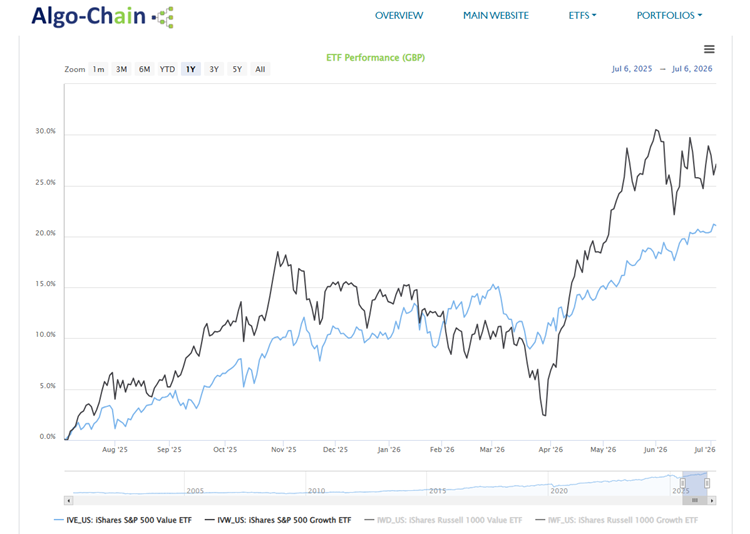 Figure 1 – When selecting ETFs it can be surprising how different the performance looks across different time periods and for different sub-sets of stocks, but is it sufficient to select an ETF just by its name?
The Audit Trail May Matter More Than the Shortlist
The most valuable output from AI may not be the shortlist but the audit trail.
In a model portfolio context, ETF selection is part of the investment process. A portfolio team should be able to explain why a specific ETF was selected, what alternatives were considered, why apparently attractive alternatives were rejected, and how the chosen fund remains consistent with the portfolio's stated objective. A selection process that cannot show what was rejected is often weaker than it appears.
As advisers, platforms, networks, insurers and regulators place more emphasis on governance, suitability and value for money, the ability to evidence selection decisions becomes more important. AI can support that process by making comparisons more consistent, documenting the criteria used, identifying exceptions, and helping produce a more structured record of decision-making.
That is where AI becomes commercially useful: not because it produces a clever answer, but because it helps make ETF selection easier to repeat, review and defend.
AI Still Needs a Framework
AI can be highly useful as part of the process, but only when it's applied within a clear investment framework. Poor data, weak criteria, unclear mandates or poorly designed prompts will not produce robust portfolio decisions. They will simply make a weak process appear more sophisticated than it is.
With AI, you can process information, identify patterns, compare funds and flag anomalies. But it cannot decide what matters for a particular client outcome without a clear investment framework. The purpose of AI in ETF selection is not to transfer judgement from people to machines. It's to support better judgement by improving the information set, reducing blind spots and creating a clearer record of why decisions were made.
Better Selection Is Becoming a Governance Advantage
ETFs have made access to markets and exposures easier, but that is no longer the edge. The more important challenge is selecting the right building blocks, monitoring them continuously and evidencing why they belong in the portfolio.
AI can widen the search universe, identify risks hidden beneath the fund label, compare ETFs against mandate-specific criteria and strengthen the evidence trail behind selection decisions. But its usefulness depends on discipline, because without governance, AI simply becomes another layer of noise.
The future of ETF selection isn't AI replacing the portfolio manager. It's portfolio judgement enhanced by specialist AI tools that broaden the opportunity set, uncover meaningful differences between apparently similar ETFs, and provide a stronger, more transparent and more defensible foundation for every investment decision.
Until next time.
Allan Lane